Sunday, August 15, 2010

The Assumption or Dormition of Mary

(Window in the Assumption Chapel, St. Charles Seminary, Carthagena, OH
where I was ordained)

 The assertion that the Blessed Virgin Mary had been taken up to glory in soul and body is first found in New Testament apocrypha of the 4th century. From the 6th century it gained support among people in both the Eastern and Western Church, and by the end of the 8th century it was generally held, and the feast of the Assumption (in the west), or the feast of the Koimesis = falling asleep (in the East) was observed on August 15. The medieval schoolmen provided theological defense for the popular devotion, though it wasn't considered an "official" teaching of the Church. In the 18th century Benedict XIV classed it among "probable" opinions. At Vatican Council I (1870) a growing desire for an official declaration was evident. This continued until November 1, 1950, when Pius XII declared and defined the Assumption/Koimesis as a dogma of the Catholic Church. The Episcopal Church honors Mary on this day as "St. Mary the Virgin".

Saturday, August 14, 2010

St. Jonathan Myrick Daniels (1939-1965) - Seminarian, Martyr


O God of justice and compassion...
We give you thanks for your faithful witness, Jonathan Myrick Daniels...
and we pray that we, following his example,
may make no peace with oppression...


"Make no peace with oppression...":

of innocent Iraqi and Afghan citizens...
of women in the Sudan and Middle Eastern countries...
of sweatshop workers in China...
of gay, lesbian, bisexual, transgender people anywhere...
of Latino farmworkers and families...
of Muslim citizens exercising their legal rights to freedom of religion...
of aging and disabled persons...
of children subjected to any kind of abuse...
of Gulf Coast citizens by corporate greed, self interest, and defiling of the environment...
of people of color through racial profiling and subtle prejudice...


Thursday, August 12, 2010

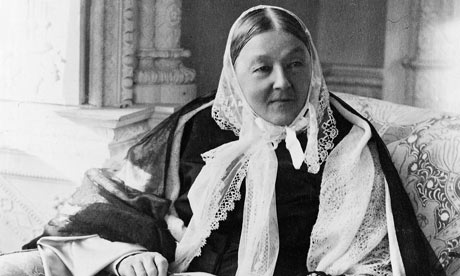
Blessed Florence Nightingale (1820-1910) - Nurse, Social Reformer

"Today, O Lord, let me dedicate this crumbling old woman to Thee.
Behold the handmaid of the Lord."
(Florence Nightingale)

In the face of opposition from her family, who were very wealthy, Florence chose to train in nursing and steadfastly accomplished her goal. After heading a private nursing institute in London, she distinguished herself through her dedication and loving care of the wounded in the Crimean War, then devoted the rest of her life, despite much personal illness and infirmity, to reforming nursing care. As an Anglican, she was an outstanding example to others in her personal spirituality until her death at 90 years of age.

Canon A. M. Allchin writes of Florence Nightingale: "...It is not easy at this length of time to envisage quite how restricted were the activities of a mid-Victorian lady...although [Florence] herself never became a member, or should one say the superior, of a community, her problems are very similar to those of her contemporaries who in fact entered the Anglican sisterhoods. She was facing all the weight of social convention, and the pitch of her feelings is plain in a private note which she wrote in 1851 [at age 31]:  'Women don't consider themselves as human being at all. There is absolutely no God, no country, no duty to them at all, except family...I have known a good deal of convents. And, of course, everyone has talked of the petty tyrannies supposed to be exercised there. But I know nothing like the petty grinding tyranny of a good English family...'

Greatly disenchanted by organized religion generally, and with the Evangelical wing of the Church of England in particular, her feelings spilled over into strong feelings about the Church itself: 'The Church of England has for men bishoprics, archbishoprics, and a little work [sic!]...For women she has -- what? I had no taste for theological discoveries. I would have given her my head, my hand, my heart. She would not have them. She did not know what to do with them. She told me to go back and do crochet in my mother's drawing roo; or, if I were tired of that, to marry and look well at the head of my husband's table. You may go to Sunday School if you like it, she said. But she gave me no training even for that. She gave me neither work to do for her, nor education for it...'

Nevertheless, she retained a deep Christian faith and received the Eucharist up to the time of her death, and even began writing a book on mysticism. She herself admits in her diary that, during a trip to Egypt in 1849, she had five mystical experiences of Christ. Though she never finished the book, through necessity of caring for her widowed mother after the death of her father, some of what she wrote gives us a sense of what was in the depths of her heart: 'Religion is not devotion, but work and suffering for the love of God. This the true doctrine of the Mystics...Where shall I find God? In myself...I must be in a state for Him to come and dwell in me. That is the whole aim of the mystical life...' 

Loving God,...Give power, wisdom and gentleness
to those who follow the lead of Florence Nightingale,
that they, bearing with them your presence,
may not only heal but bless...in the darkest hours of pain and fear..."


Wednesday, August 11, 2010

"The First Flower In My Garden"


"Clare was the first flower in the garden of the Poor Man of Assisi. Poor in earthly goods, but rich in her utter poverty, she was a replica of Jesus, poor in the crib and on the Cross. At her time the Church generally and many Church men were enmeshed in financial matters and political maneuvering. Through the renewal of the ideal of poverty, St. Francis effected a 'reform of Christian life in head and members.'


In our...century there still remain large areas with millions suffering under extreme poverty. Poverty in itself is no virtue, but it should be made into a virtue...


These considerations should make poverty more attractive and lovable to us again. Whoever has poverty as his companion should embrace her, live joyfully with her, and be grateful for her realm of spiritual riches. And those who have money must cherish the spirit of poverty. How we ought to love a certain responsory that keeps recurring throughout this month:
Two things I have asked of Thee,
deny them not to me before I die:
Give me neither beggary nor riches!
Allow me only the necessities for life.

At least we can be moderate and frugal, and thereby find the way to the spirit of Christian poverty. St. Clare, help us."
(Fr. Pius Parsch, The Church's Year of Grace, Vol. 4)

Monday, August 9, 2010

Remembering Two Sisters

Rosa Adelheid Stein (1883 - 1942 in Auschwitz)
Edith Hedwig Stein [St. Teresia Benedicta of the Cross, OCD] (1891 - 1942 in Auschwitz)

Jewish blood sisters.
Spiritual sisters in the Catholic faith.
Sisters in the Order of Carmel: Edith, as a professed nun; Rosa, as a lay-extern/portress.
Sisters in the Nazi prison camps of Amersfoort, Westerbork, and Auschwitz.
Sisters in death in Auschwitz, August 9, 1942.

Unfortunately, many people aren't aware that there were also other Stein family members who lost their lives in the Holocaust:
 - Paul Stein (1872 - 1943), eldest brother of Rosa and Edith, along with his wife, Trude [Gertrude] Stein (1872 - 1943), at Theresienstadt.
- Frieda [Elfriede] Stein Tworoger (1881- 1942), sister of Rosa and Edith, at Theresienstadt.
- Eva Stein (1915-1943), niece of Rosa and Edith, daughter of their brother Arno Stein and his wife, Martha.

Susanne Batzdorff, niece of Rosa and Edith, and daughter of their sister, Erna, writes:
"After all these years, it is still extremely painful for me to think about the tragic end of Rosa and Edith Stein, but I have wondered whether in those days and hours of horror and fear their togetherness may have given them strength and comfort. There is a passage in Jewish liturgy, concerning the slaughter of the martyrs...'Beloved and true were they in life, and even in death they were not divided.' That is how I picture Rosa and Edith. Alone, Edith could have found asylum in Switzerland, but she refused to accept refuge without Rosa, and in the end they met death together..." (Susanne M. Batzdorff, Aunt Edith: The Jewish Heritage of a Catholic Saint, Templegate, 1998)

Do you want to be totally united to the Crucified?
If you are serious about this, you will be present,
by the power of His Cross, at every front, at every
place of sorrow, bringing to those who suffer comfort,
healing, and salvation;

St. Teresia Benedicta of the Cross, OCD
From an unpublished meditation


Sunday, August 8, 2010

"Do Not Be Afraid"


"Do not be afraid."
Ever notice how often that's repeated in both the Hebrew and Christian Scriptures? Since it's spoken frequently by God, you get the impression that it's pretty important advice! "Do not be afraid...for I will make of you a great  nation." (Genesis 46)  "Let not your heart faint, do not fear...for the Lord your God is the One who goes with you." (Deuteronomy 20)  "Do not be afraid, Mary, for you have found favor with God." (Luke 1)  "Joseph, son of David, do not fear to take Mary for your wife..." (Matthew 1)  "Fear not; you are of more value than many sparrows." (Luke 12)  "Do not be afraid, Paul..." (Acts 27)  "Fear not, I am the first and the last, and the living One."

Fear is real, and everyone of us must deal with it throughout our lives. Children often fear the dark and need a light left on; or ghosts and monsters, or big animals; or that Dad or Mom will leave them. Young adults live in fear of being embarrassed, of being made fun of; of standing out in a crowd; of being rejected by a girlfriend or boyfriend; of the uncertainty of the future or of life in general. Adults fear being unsuccessful, of not accomplishing something lasting. There's perhaps fear that a spouse may no longer love one. We're fearful about financial security, and about our children: their values, their safety, their choices in life. Once we reach the sunset of life we often fear for our health, our dwindling abilities, physical and mental. We may be fearful of becoming a burden for our family. And we fear having to face our own death.

As human beings we find it easier to deal with fear, to make it bearable, through faith and hope. If our relationship with God in Christ is truly a priority for us, we will come to trust in God's assurance, God's Word, and be able to stake everything on it.

Abraham, of course, has been a traditional and preeminent model of faith, for a number of reasons. The liturgical readings for today (Genesis 15:1-6 and Hebrews 11:1-3; 8-16) clearly allude to one of them. In the Genesis reading, Abram (this is before God renames him "Abraham" = "father of a multitude" in Genesis 17) frets over the fact that he's still childless, and that his servant, Eliezar, will legally become his heir. In a dramatic gesture, God allays his fear with the assurance: "Look toward heaven and count the stars, if you are able to count them...So shall your descendants be." The Genesis writer comments: "And he believed the Lord; and the Lord reckoned it to him as sedaqa = rightness, rectitude, virtue." In other words, Abram, in taking God at God's Word, in trusting God, treated their relationship as the reality that it really was: as kids today would term it, it was "all good", the understanding between them was "cool". And the unspoken corollary is that it was all clearly on God's loving initiative, with Abram adding his own free, loving consent and commitment.

The reading from Luke is expressed in much the same terms. In the 10 verses before this passage, Jesus had been urging the disciples: "Do not worry..." (Luke 12;22) Don't worry even about the basic things: food, or clothing for the body. He reminds them of three things: 1) that worrying and anxiety doesn't "add a single hour to your span of life..."; 2) that the concern of the surrounding culture over economic systems, financial security, acquiring goods or maintaining what one already possesses isn't his standard, nor should it be that of his followers; and 3) that the Father already knows what they need, "...and these things will be given to you as well."

Luke's Jesus continues: "Do not be afraid, little poimnion = group or flock, for it is your Father's good pleasure to give you the basileía = realm, reign, kingdom". In both Matthew 3 and earlier in Luke 10, Jesus referred to "reign of God" being at hand, right here, so close and present as to actually be "within you",  If the "reign" is Godself, God's Presence in the risen Christ, then what the Father delights to give us is what a contemporary theologian, Christopher Pramuk, commenting on Hagia Sophia = Holy Wisdom in Thomas Merton's writings, describes as: "...the Spirit of Christ but more than Christ. She is the Love joining the Father, Son, and Spirit that longs for incarnation from before the very beginning...the 'pivot' (le point vierge = the virgin[al] point) of nature...and all creation in God from the beginning. Perhaps most of all...Sophia is our 'true self,' when we (like Mary, seat of Wisdom) allow Christ to be birthed in us, and so realize the hidden ground of mercy, creativity, and presence in our very selves, the mystical Body of Christ. The moment her name awakens in us a sense of mercy, communion, and presence, Sophia...is not symbolic, but real, more than literally real. The remembrance of Sophia opens onto a mystical-political spirituality of engagement in the world..." (Christopher Pramuk, Sophia: The Hidden Christ of Thomas Merton, Liturgical Press, 2009, pp. 207-208)

You and I would do well to take time to think about what that means. And if that doesn't help you and me to not be afraid, I can't imagine what else would!

Thursday, August 5, 2010

The Transfiguration of Jesus - August 6


A bishop was astonished to hear a little boy say that a person must be brave to go to church.
"Why do you say that?", the bishop asked.
"Well," said the boy, "I heard my uncle tell my aunt last Sunday that there was a canon in the pulpit, the choir murdered the anthem, and the organist drowned the choir!"

Far more serious things, I believe, threaten the gathering of God's people, the Church. Yet, as St. Peter exclaims in the Gospel story of the Transfiguration (Luke 9:28-36), "...it is good for us to be here..." And that is true because our coming together in Eucharist, in thanksgiving, to Jesus is our refuge as we struggle to live in a world of problems, tragedy, disappointment, suffering and bad news. It's a center for renewal, encouragement and refreshment from which we can go back to face those challenges with the Good News of hope and love, proclaimed by Jesus.

The message of the Transfiguration is precisely that there's hope for all of us because God has promised us God's abiding presence, and we have that assurance in Jesus, God's beloved, favored Son. The church of the author of the 2nd Epistle of Peter, c. 30-40 years after Peter's death, deals with much the same things as we do today, particularly the frequent distortion of the Christian message and tradition. 2nd Peter emphasizes the promises which God has made to us, enabling us to avoid such distortion and corruption of what Jesus has taught us.

"1 Simon Peter, a servant and apostle of Jesus Christ, to those who have received a faith as precious as ours through the righteousness of our God and Saviour Jesus Christ:
2 May grace and peace be yours in abundance in the knowledge of God and of Jesus our Lord.
3 His divine power has given us everything needed for life and godliness, through the knowledge of him who called us by his own glory and goodness. 4 Thus he has given us, through these things, his precious and very great promises, so that through them you may escape from the corruption that is in the world because of lust, and may become participants in the divine nature. 5 For this very reason, you must make every effort to support your faith with goodness, and goodness with knowledge, 6 and knowledge with self-control, and self-control with endurance, and endurance with godliness, 7 and godliness with mutual affection, and mutual affection with love. 8 For if these things are yours and are increasing among you, they keep you from being ineffective and unfruitful in the knowledge of our Lord Jesus Christ. 9 For anyone who lacks these things is short-sighted and blind, and is forgetful of the cleansing of past sins. 10 Therefore, brothers and sisters, be all the more eager to confirm your call and election, for if you do this, you will never stumble. 11 For in this way, entry into the eternal kingdom of our Lord and Saviour Jesus Christ will be richly provided for you..."

We all fight demons from within and without: from within, because there are times in life when we forget or foolishly turn away from the "precious and very great promises." Can we wonder, then, why we become "short-sighted and blind"? 2nd Peter's community also faced what we face today: demons from without: accusations by those without faith that we have no right, no "proof" to make such claims, that we're simply falling for "myths".

"...12 Therefore I intend to keep on reminding you of these things, though you know them already and are established in the truth that has come to you. 13 I think it right, as long as I am in this body, to refresh your memory, 14 since I know that my death will come soon, as indeed our Lord Jesus Christ has made clear to me. 15 And I will make every effort so that after my departure you may be able at any time to recall these things. 16 For we did not follow cleverly devised myths when we made known to you the power and coming of our Lord Jesus Christ, but we had been eyewitnesses of his majesty. 17 For he received honour and glory from God the Father when that voice was conveyed to him by the Majestic Glory, saying, ‘This is my Son, my Beloved, with whom I am well pleased.’ 18 We ourselves heard this voice come from heaven, while we were with him on the holy mountain..."

For critics and enemies of the Church, all this teaching about Jesus' second coming, much less his first coming, is a humanly devised story, made up to control naive people. 2nd Peter makes two things clear. 1) Peter was an eyewitness to the Transfiguration. It really happened, and the tradition about the second coming isn't just rumor. 2) Godself honors and glorifies Jesus in the Transfiguration. God proclaims: "This is my Son, my Beloved, with whom I am well pleased." The experience of the Transfiguration, therefore, isn't made up or secondhand. It really happened, and God's power and majesty which Peter beholds on Mt. Tabor is prophetic and symbolic of how Jesus will be when he appears again to judge the living and the dead. The prophetic message about Jesus' coming again in power, which God revealed, which the Apostles preached and handed down, and which the Church continues to proclaim, has a firm foundation: God's own word and Spirit.


"...19 So we have the prophetic message more fully confirmed. You will do well to be attentive to this as to a lamp shining in a dark place, until the day dawns and the morning star rises in your hearts. 20 First of all you must understand this, that no prophecy of scripture is a matter of one’s own interpretation, 21 because no prophecy ever came by human will, but men and women moved by the Holy Spirit spoke from God."


Jesus, in the Transfiguration, is assured that his impending passion and death isn't the end of the story. The cross is but a preliminary to full glorification in the Resurrection and Ascension. This Transfiguration event in Jesus' life which we celebrate today is God's promise in the process of being fulfilled now and made real for us, each day, as Jesus the Morning Star rises and will finally and fully rise "in [our] hearts" -- in us -- never to set.  That's the reality, the hope, the Good News, which we're to live with and to share in our families, our places of work, and among our friends.

Is it believable? Is it possible?
An unknown 15th century poet put it this way:

Thou shalt know him when he comes,
Not by any din of drums,
Nor by the vantage of his airs,
Nor by anything he wears,
Neither by his crown, 
Nor by his gown,
For his presence known shall be
By the holy harmony
Which his coming makes in thee.